
Finding the Best Prayer Mats in the UK for Comfort and Durability
The prayer mat, or sajadah, is far more than a simple piece of fabric. For Muslims across the United Kingdom and the world, it is a personal sanctuary, a portable piece of pure ground upon which the five daily prayers are performed. It delineates a sacred space for communion with God, a clean foundation for the physical expression of faith. The act of Salah involves a series of postures, from standing in quiet reflection to bowing in humility and prostrating in ultimate submission. Each movement is a testament to devotion, and the surface upon which these acts take place becomes an integral part of this cherished daily ritual. It is a companion in worship, a silent witness to countless moments of spiritual connection.
Given its central role, the physical characteristics of a prayer mat are of great importance. The physical demands of prayer, particularly the pressure placed on the knees, ankles, and forehead during prostration and sitting, call for a surface that offers both comfort and stability. This is not about luxury for its own sake, but about facilitating a deeper, more focused worship, free from the distraction of physical discomfort. For individuals with joint pain, the elderly, or simply anyone seeking to protect their body during repeated daily movements, a high quality prayer mat is a worthwhile consideration. This guide will explore the key factors to consider when seeking the best prayer mats in the UK, focusing on how to find a durable, supportive, and comfortable foundation for your spiritual practice.
Prioritising Comfort and Joint Support in Your Daily Prayers
Understanding the Materials That Define a Quality Prayer Mat
The feel, weight, and performance of a prayer mat are largely determined by the materials used in its construction. The market offers a wide spectrum of options, from thin, lightweight mats designed primarily for portability to thicker, more substantial rugs intended for regular use at home. Simple woven polypropylene or cotton mats are often easy to clean and carry, making them suitable for travel or for carrying to the mosque. However, for daily prayers at home, where comfort and support are paramount, denser and plusher materials come to the fore.
Among the most sought after materials for home use is velvet. A high quality velvet prayer mat is prized for its unique combination of a luxuriously soft surface and a dense, supportive pile. The texture is gentle against the skin, particularly during prostration, while the inherent thickness of the fabric provides significant cushioning for the knees and feet. The way velvet is woven creates a deep pile that resists immediate flattening, offering a more resilient form of comfort compared to simpler plush fabrics. This density is key to its supportive properties, distinguishing it from materials that may feel soft to the touch but offer little in the way of genuine joint protection.
Beyond velvet, other materials like acrylic, wool, and various memory foam composites are also used to create comfortable prayer rugs. Each has its own characteristics. For instance, foam-padded mats provide excellent orthopaedic support, targeting pressure points directly, though they can be bulkier. The choice of material impacts not only the level of comfort but also the mat’s texture and overall aesthetic. A quality fabric will feel substantial and pleasant, contributing to the overall sense of peace and preparedness for prayer. It should provide a stable, non-slip surface that allows you to perform each movement with confidence and grace.
The Balance Between Plush Comfort and Enduring Durability
When searching for a comfortable prayer mat, it can be tempting to choose the softest, most plush option available. However, true quality lies in the delicate balance between immediate softness and long term durability. An excessively soft mat made from low density fibres may feel luxurious at first, but it is likely to flatten quickly under the repeated pressure of daily prayers. This loss of volume, known as pile collapse, diminishes its supportive qualities, leaving you with a mat that no longer provides the cushioning your joints require.
A genuinely durable prayer mat is engineered to withstand consistent use. The key indicator of this is not just the softness of the surface fibres but the density of the pile. A dense pile means that the fibres are tightly packed together, creating a strong, resilient structure that can bounce back after compression. This construction ensures that the mat maintains its thickness and supportive properties over months and years of worship. The quality of the backing material is also crucial. A robust, well-made backing provides structural integrity, prevents the mat from slipping on hard floors, and protects the pile from the base.
Furthermore, attention to finishing details often signals a well-made product. Strong, secure stitching around the edges prevents the fabric from fraying and ensures the different layers of the mat, such as the pile and the backing, remain firmly bonded. A prayer mat is an item of daily use, a constant companion in one’s spiritual life. Investing in one that is built to last is a practical and respectful choice. It means you are choosing a product that will continue to provide comfort and support, helping you focus on your prayers without the need for frequent replacement. A durable mat is a reliable foundation for devotion.
Aesthetics and Atmosphere: Choosing a Design for Your Prayer Space
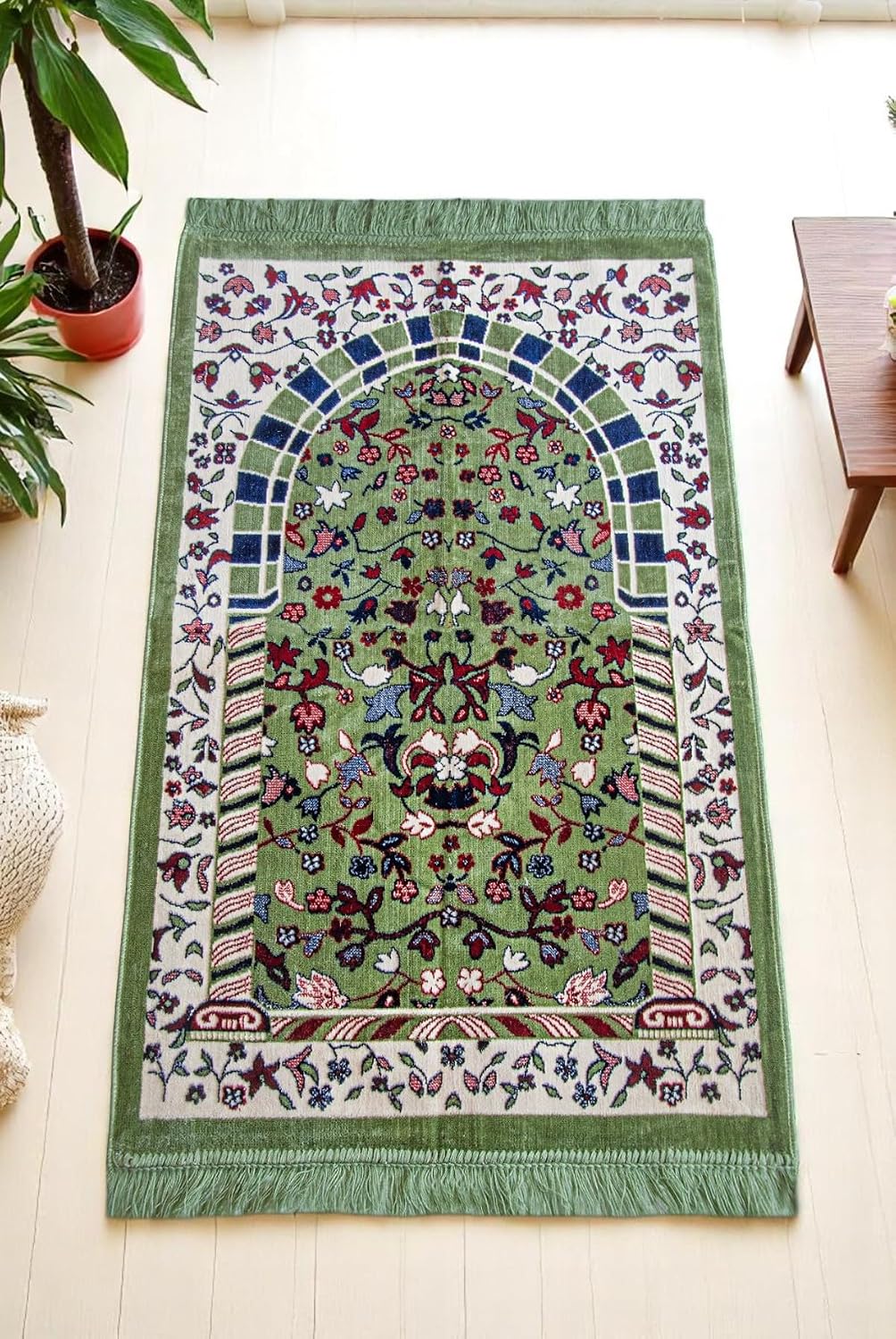
While the functional aspects of a prayer mat like support and durability are vital, its aesthetic and design are also deeply significant. The mat serves to create a distinct, clean, and sacred space for worship, and its visual appearance plays a crucial role in setting a reverent tone. Traditional designs have been cherished for centuries, often incorporating motifs that hold symbolic importance within Islamic art and architecture. The most common of these is the mihrab, an arch-shaped design that is intended to be pointed towards the Qibla in Makkah, helping to orient the worshipper for prayer.
Other popular traditional designs include intricate geometric patterns, floral arabesques, and depictions of the Holy Kaaba. These patterns are intentionally non-figurative, in line with Islamic artistic traditions, to prevent distraction and help the mind focus purely on God. The complex, repeating geometry can itself be an object of contemplation, reflecting the infinite and ordered nature of the divine. The colour palette of these mats often consists of rich, deep hues like burgundy, navy, forest green, and gold, evoking a sense of solemnity and tradition.
In recent times, there has also been a rise in more contemporary and minimalist designs. These mats might feature solid colours, simple borders, or subtle textural patterns, appealing to a modern aesthetic. For some, a minimalist design provides a less visually cluttered space, further aiding concentration. A beautifully designed velvet prayer rug, for instance, can combine a simple, elegant pattern with the rich texture and slight sheen of the fabric, creating an object of understated beauty. Ultimately, the choice of design is a personal one. The best design is one that brings you a sense of peace, helps you focus your intention, and makes your personal prayer space feel special and consecrated for its sacred purpose.
Caring for Your Prayer Mat to Ensure Its Longevity
A prayer mat is a cherished item that deserves to be treated with respect and care. Proper maintenance not only keeps it clean and hygienic but also significantly extends its life, preserving its comfort and appearance for years to come. The first step in caring for your mat is regular, light cleaning. Since it is a space of purity, it is important to keep it free from everyday dust and debris. This can be easily achieved by taking it outside and giving it a good shake after use or by gently going over the surface with a soft brush or a low-suction handheld vacuum.
For minor spills or stains, spot cleaning is the most effective method. Act quickly by blotting the area with a clean, dry cloth to absorb as much of the spill as possible. Then, use a damp cloth with a very small amount of mild, pH-neutral soap to gently dab at the stain. Avoid vigorous rubbing, as this can damage the fibres, especially on delicate fabrics like velvet. Always test the cleaning solution on an inconspicuous corner first to ensure it does not affect the colour. Once the spot is treated, allow the mat to air dry completely before rolling it for storage.
Proper storage is also key to maintaining the mat’s shape and structure, particularly for thicker, padded varieties. It is generally better to roll the mat loosely rather than folding it. Folding can create permanent creases and may eventually cause the internal padding or backing to break down. Store the rolled mat in a clean, dry place away from direct sunlight, which can cause colours to fade over time. By incorporating these simple care practices into your routine, you honour the function of your prayer mat and ensure it remains a clean, comfortable, and worthy companion for your daily worship.
Velvet Muslim Prayer Rug
A soft, padded velvet prayer rug that makes a thoughtful gift and a comfortable everyday mat. This is an affiliate link.
Key things to remember
- Consider the mat's backing to prevent slipping on smooth floors.
- Roll your prayer mat instead of folding it to avoid deep creases.
- Choose calming, non-distracting designs to aid concentration in prayer.
- Regularly air out your mat to keep it fresh and hygienic.
Frequently asked questions
How do I choose the right thickness for a prayer mat?
The ideal thickness depends on your personal needs. Thicker, padded mats provide excellent support for joints and are ideal for home use on hard floors. Thinner, more lightweight mats are better suited for travel or carrying to the mosque. Consider your primary use and the type of flooring it will be placed on.
What is the significance of the design on a prayer mat?
Designs on prayer mats often feature traditional Islamic art, such as an arch (mihrab) to orient towards the Qibla, or geometric patterns. These non-figurative designs are intended to help create a focused, sacred space for worship and aid concentration by avoiding distracting imagery.
How can I clean my prayer mat properly?
For daily care, shake the mat to remove dust. For small spots, gently blot with a damp cloth and a touch of mild soap. For deeper cleaning, always follow any specific care instructions provided. Generally, avoid harsh chemicals and machine washing unless specified, as this can damage the fibres and backing.
Is a velvet prayer mat a good choice for durability?
A high-quality velvet prayer mat can be an excellent choice for durability. Its resilience comes from a densely packed pile and a strong backing, which resist flattening over time. This construction balances luxurious softness with the strength required for daily, long-term use.