
How To Host A Murder Mystery Dinner Party: The Ultimate UK Guide
A murder mystery dinner is the rare party where the awkward bit at the start is the point. Everyone arrives in character, nobody has to make small talk, and by pudding the room has turned on itself.
Here's how to run one at home, from the invitations six weeks out to the reveal at the end - including how to do it without writing a single line of plot yourself.
Shop the cards that go with these
Shop party supplies Murder mystery party for beginners Cosy hen party cottage ideas Low-key hen do games
Party bits for the night itself
Banners, balloons and bunting we print and pack in the UK, for the table you're about to stage a murder across.


Six weeks out: pick the format
- A boxed kit like the At Home Murder Mystery game does the hard part for you - characters, clues, timings and the solution are all in the box, so the host gets to play too.
- A downloadable script kit is cheaper and usually longer, but you'll be printing and stapling for an evening.
- Writing your own is fun and enormous work. Allow a full weekend and a very patient friend to read it.
- Decide the era and setting first - 1920s country house, 1970s disco, Victorian parlour, Prohibition speakeasy. It drives everything else.
- Lock the guest count early. Most kits are written for six to ten, and the plot breaks if two people drop out.
Invitations and casting
- Send invites four weeks out with the date, the dress code and the character each guest is playing.
- Cast to personality, not to gender - give the biggest ham the loudest role and the quiet one the secret.
- Include a one-paragraph character brief so nobody panics about improvising.
- Say plainly that costume means 'a hat and a scarf' if that's all people can manage. Otherwise half of them won't come.
- Have one spare character printed. Someone always brings a plus one.
The menu: make it ahead
- Three courses, all cold or all oven-only. You cannot be basting anything while a body is being discovered.
- Starter on the table when guests arrive: soup in mugs, pâté and toast, or a sharing board.
- Main from one dish - beef bourguignon, a big lasagne, a vegetarian tagine. Serve it family style.
- Pudding pre-portioned: posset, trifle or brownies. No plating in the middle of a round.
- A signature drink named after the victim, and a jug of something soft that looks the same.
- Theme the menu names on the printed card rather than the food itself. Much less work, same effect.
Setting the scene
- Low light, candles down the table, one lamp in the corner. Overhead lights kill the whole thing.
- A period playlist on low - jazz for the 1920s, strings for a Victorian night, disco for the 1970s.
- Name cards and a seating plan, so people meet the characters they're supposed to suspect.
- Props as clues on the sideboard: a letter, a glove, a broken glass, a bottle marked with a tag.
- A chalkboard or big sheet of paper for the suspect wall. It becomes the centre of the night.
- Something to mark the body - a chalk outline in tape works and photographs well.
The running order on the night
- 7.00 Arrivals, drink in hand, everyone introduces themselves in character. Ten minutes, no more.
- 7.20 Round one: starters and the first set of secrets. The victim is still very much alive and annoying everyone.
- 8.00 The murder. Lights, a scream, or just the host announcing it. Hand out round two.
- 8.15 Main course and interrogation. Guests can ask any two people one question each.
- 9.15 Round three: new clues, alibis fall apart, everyone reads their next card.
- 10.00 Accusations. Everyone names a killer and gives one reason.
- 10.15 The reveal, then pudding and the post-mortem, which is always the best bit.
Hosting problems and how to fix them
- Someone drops out on the day: fold their clues into the host's character or read their card aloud as a letter.
- One guest won't act: give them the role of the detective. It's all questions, no performance.
- The plot stalls: call a 'gossip round' where everyone must share one fact they've been sitting on.
- It's running long: skip a round rather than rushing the reveal.
- Nobody's guessing: read a clue out to the room as an anonymous note.
Found your words? Now find the card
Shop party supplies Murder mystery party for beginners Cosy hen party cottage ideas Low-key hen do games
How to write it so it lands
- Read the whole kit through once, alone, a week before. Every hosting disaster comes from skipping this.
- Print spare character sheets. Someone will spill red wine on theirs in round one.
- Take a group photo in character before the murder. It's the picture people keep.
You might also be interested in...
We make cards, pin badges, prints and party bits in house. These are from other shops we rate, and buying through the link costs you nothing extra.
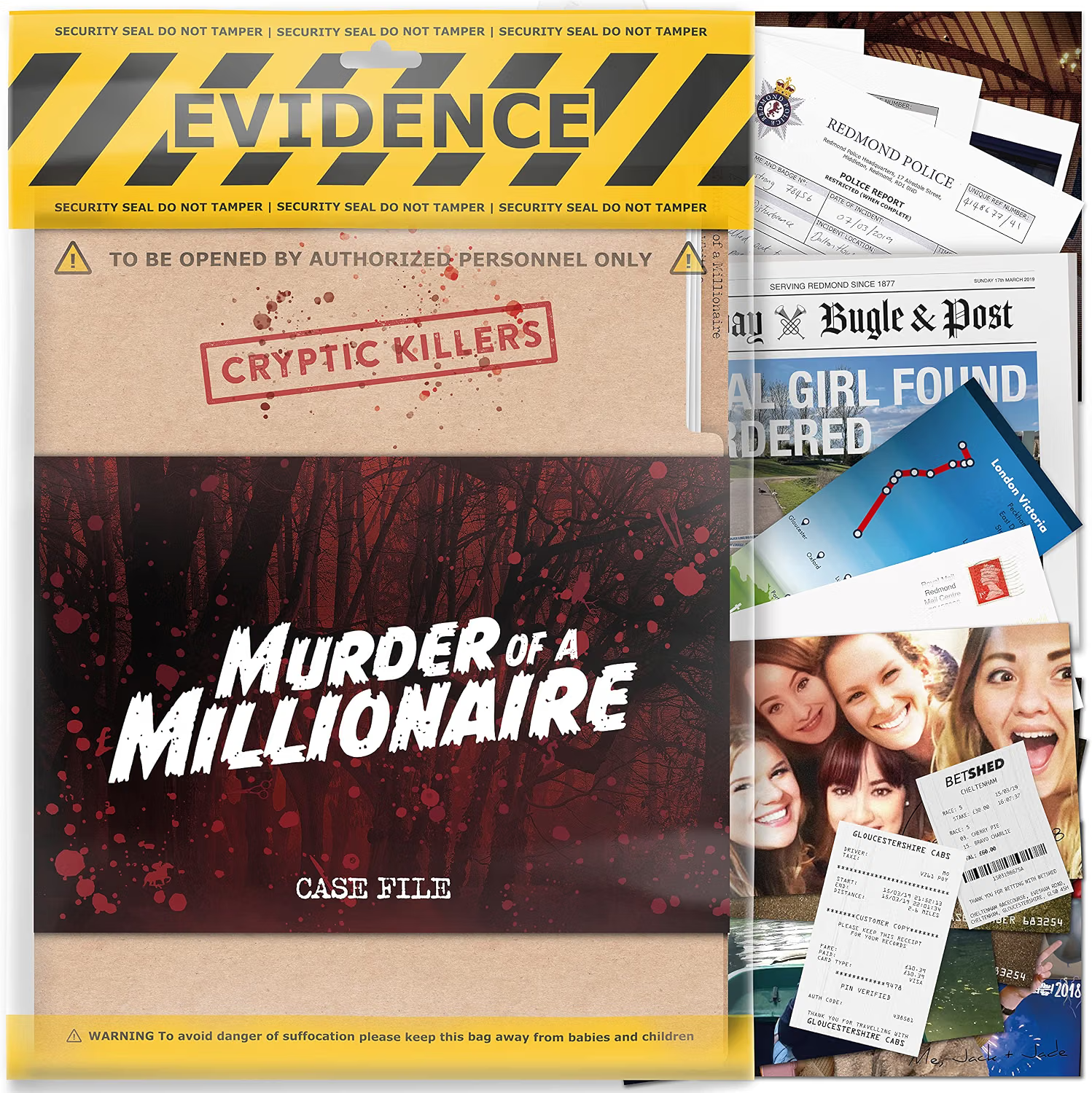
At Home Murder Mystery
Say it first
Where to shop next
- Murder mystery party for beginners
- Cosy hen party cottage ideas
- Low-key hen do games
- Alternative New Year's Eve ideas
- Sophisticated Halloween ideas for adults
- Rainy day things to do with friends
- How to plan a 30th birthday party at home
- How to host a Traitors theme night
- Best social deduction board games
- After-dinner board games for adults
- Board games hub
- Free feel good tools
- Shop all cards
- Planning the party? Birthday party ideas
- How to make a balloon arch
- Photo booth prop ideas
- Pin badges
- All guides
Frequently asked questions
How do you host a murder mystery party at home?
Pick a kit or script for your exact number of guests, cast characters four weeks ahead, cook a make-ahead menu, dim the room, and run three rounds of clues with a reveal at the end. A boxed game like the At Home Murder Mystery does the plotting and timing for you.
How many people do you need for a murder mystery dinner?
Six to ten. Most kits are written for that range. Below six there aren't enough suspects; above ten the interrogation rounds take too long and quieter guests disappear.
How long does a murder mystery party last?
Around three hours including dinner - roughly forty minutes per round across three rounds, then the accusations and reveal.
Do guests have to dress up?
It helps enormously, but set the bar low in the invitation. A hat, a scarf or one accessory per character is enough to shift how people behave.
Can the host play too?
With a boxed kit, yes - the solution sits in a sealed envelope so nobody needs to know it in advance. With a self-written script the host usually has to narrate instead.
Do you sell board games or murder mystery kits?
No. We make greeting cards, art prints, pin badges and party bits in the UK, so the games here are simply what we'd recommend to a friend. Some links go to other shops and may earn us a small commission, at no extra cost to you.