
Traditional Irish, Scottish And Welsh Party Games: 20 Explained
A lot of what people think of as British party games are specifically Irish, Scottish or Welsh - Halloween itself is largely an Irish export, and Hogmanay has customs nowhere else does.
Here are the games and traditions worth knowing, grouped by where they come from.
Cards drawn and printed by us
Funny, rude and warm greeting cards for every occasion, blank inside, printed in the UK with kraft envelopes. Order on a working day and it usually goes out the same day.
 Happy Birthday Papa (Happy Birthday Card) (Multiple designs)
£3.87
Happy Birthday Papa (Happy Birthday Card) (Multiple designs)
£3.87
 Happy Birthday Bab (Happy Birthday Card) (Multiple designs)
£3.87
Happy Birthday Bab (Happy Birthday Card) (Multiple designs)
£3.87
 Yoda Best Multi-Occasion Greeting Card
£3.87
Yoda Best Multi-Occasion Greeting Card
£3.87
 Happy Birthday Handsome (Happy Birthday Card) (Multiple designs)
£3.87
Happy Birthday Handsome (Happy Birthday Card) (Multiple designs)
£3.87
 You Old Bastard (Funny Birthday Card)
£3.87
You Old Bastard (Funny Birthday Card)
£3.87
 Happy Birthday Card For The World's Best Sister-in-Law
£3.87
Happy Birthday Card For The World's Best Sister-in-Law
£3.87
Irish games and traditions
- Snap apple: an apple hung from a string, eaten with no hands. Halloween in Ireland was Snap Apple Night long before it was anything else.
- Apple bobbing, which came the same way.
- The barmbrack: a ring, a coin, a pea and a rag baked into a Halloween cake - the ring means marriage, the coin wealth, the pea poverty, the rag bad luck.
- The three saucers game - blindfolded, you pick a saucer: water means emigration, a ring means marriage, clay means bad news.
- Ceili dances: the Siege of Ennis and the Walls of Limerick, both learnable in one go with a caller.
- The 45s card school, which is the game in a great many Irish households.
Scottish games and traditions
- Hogmanay first footing - the first person over the threshold after midnight brings coal, bread, salt, a coin and whisky. Traditionally dark-haired.
- Redding the house: the whole place cleaned before midnight so the new year starts fresh.
- Auld Lang Syne with arms crossed - but only from the last verse, not the whole song.
- Ceilidh dances: Strip the Willow, the Gay Gordons, the Dashing White Sergeant and the Eightsome Reel. A caller means nobody needs to have done it before.
- Guising at Halloween - children perform a song, joke or poem before they get anything. The performance is the whole point and it's older than trick or treating.
- Highland games in miniature: welly toss instead of the caber, tug of war, a sack race.
Welsh games and traditions
- Mari Lwyd - a decorated horse's skull on a pole goes door to door at midwinter and the households trade insulting rhymes with it, the pwnco. Whoever runs out of verses lets the other in.
- Calennig: children go round on New Year's morning with an apple studded with cloves and sprigs, singing for a small gift.
- Eisteddfod-style competitions at a party - recitation, singing, a poem written on the spot, judged by the oldest person present.
- Twco fale, the Welsh apple bobbing.
- Rugby-based games for the garden, which is not a stereotype so much as a fact.
Games common to all three
- Ceilidh or twmpath dancing with a caller - the most reliable way to get a mixed-age room on its feet.
- A singsong round a table, which needs one person willing to start.
- Card schools: whist, 25s, 45s and Newmarket.
- Storytelling competitions, the taller the better.
- A quiz with rounds on each nation, which will start an argument and that's the point.
How to write it so it lands
- A ceilidh caller means nobody needs to know the dances.
- Bake something with a charm in it - it makes the evening.
- One person has to start the singsong. Be that person.
You might also be interested in...
We make cards, pin badges, prints and party bits in house. These are from other shops we rate, and buying through the link costs you nothing extra.
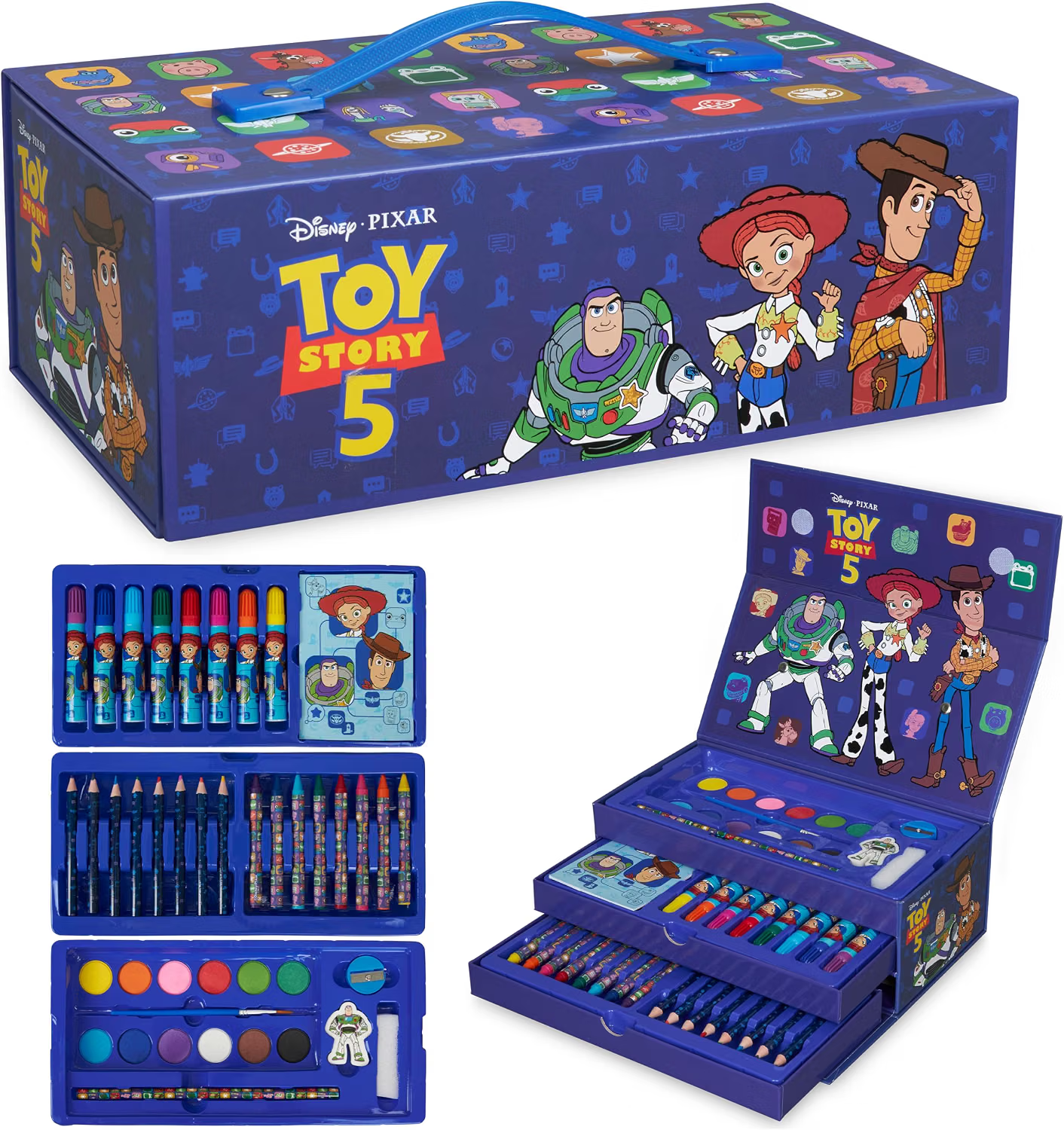
Toy Story Art Supplies
Where to shop next
- Traditional British party games explained
- Victorian and vintage parlour games
- Church hall and village fete games
- Wartime and 1950s party games
- Seaside and beach games
- Clapping games and skipping rhymes
- Card games your nan taught you
- Dice games explained
- Pen and paper games
- Playground games we all played
- Board games hub
- Kids' party games by age
- Nostalgic quiz questions
- Free feel good tools
- Shop cards
- Planning the party? Birthday party ideas
- How to make a balloon arch
- Photo booth prop ideas
- Birthday cards for kids
- Wedding cards
- Wedding cards guide
- Pin badges
- All guides
Frequently asked questions
What are traditional Irish party games?
Snap apple and apple bobbing at Halloween, the barmbrack with a ring baked inside, the three saucers fortune game, and ceili dances like the Siege of Ennis and the Walls of Limerick.
What is first footing at Hogmanay?
The first person through the door after midnight brings luck for the year, traditionally a dark-haired man carrying coal, bread, salt, a coin and a drink. Houses are also cleaned before midnight - 'redding the house' - so the year starts fresh.
What is the Mari Lwyd?
A Welsh midwinter custom where a decorated horse's skull on a pole is carried door to door. The party outside and the household inside trade insulting improvised rhymes - the pwnco - until one side runs out and the Mari is let in.
What is guising?
The Scottish Halloween tradition where children in costume perform a song, joke or poem at each door before receiving anything. Trick or treating grew out of it, but the performance was always the point.
Do you sell games?
No - we make greeting cards, art prints and pin badges in the UK. Every game here needs a pack of cards, some dice, a pencil or nothing at all, and the only products on this page are our own cards.